You might think that making your air conditioning system more eco-friendly is challenging, but it doesn’t have to be. Simple steps like regular maintenance and upgrading to energy-efficient models can make a large difference. You can greatly reduce energy consumption by using programmable thermostats and optimizing your home’s insulation. Have you ever considered how planting shade trees could lower your cooling costs and benefit the environment? Explore practical and effective strategies to transform your AC system into an eco-friendly powerhouse.
Regular Maintenance
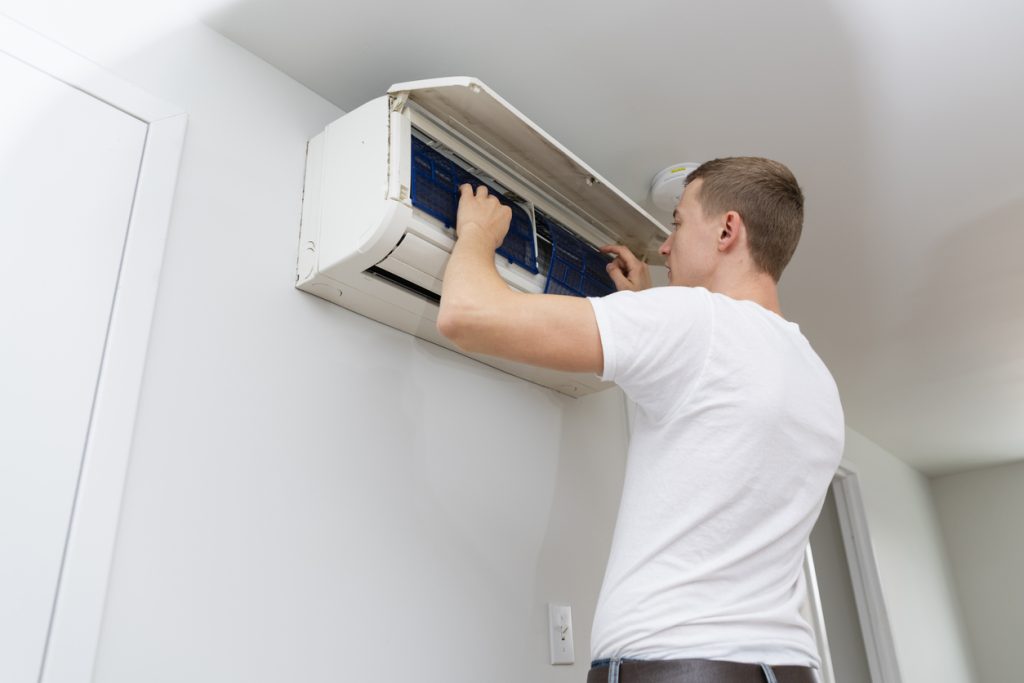
Regular maintenance is essential for guaranteeing the efficiency and longevity of your AC system. According to the U.S. Department of Energy, routine checks can reduce energy consumption by up to 15%. Start by cleaning or replacing the air filters every one to three months. Dirty filters restrict airflow, causing the system to work harder and consume more energy. Next, inspect the evaporator and condenser coils annually. Dust and debris on these coils can decrease their heat-absorbing capacity, leading to higher energy use.
Check the refrigerant levels as well. An incorrect amount can make your AC less efficient and more prone to breakdowns. If you notice any leaks, address them immediately to prevent environmental harm and maintain peak performance. Another vital task is to clean the area around the outdoor unit. Debris, such as leaves and grass, can obstruct airflow, making the system less efficient.
Upgrade to Energy-Efficient Models
To further enhance efficiency and sustainability, contemplate upgrading to energy-efficient AC models that use advanced technology to considerably lower energy consumption. Modern AC units boast higher SEER (Seasonal Energy Efficiency Ratio) ratings, often exceeding 20, compared to older models that typically have ratings of 10-13. Choosing units with higher SEER ratings will reduce energy usage by up to 50%, translating to significant savings on your utility bills and a smaller carbon footprint.
Investing in models with variable-speed compressors can also make a substantial difference. These compressors adjust their speed based on cooling demand, ensuring the system operates only as much as needed. This not only enhances efficiency but also extends the lifespan of your AC unit.
Look for units with the ENERGY STAR label, which indicates they meet strict energy efficiency guidelines set by the U.S. Environmental Protection Agency. According to ENERGY STAR, upgrading to certified models can save you about $200 annually on energy costs.
Use Programmable Thermostats
Using programmable thermostats allows you to optimize cooling schedules, ensuring your AC system runs efficiently and only when necessary. You can markedly reduce energy waste by setting precise temperature controls based on your daily routines. For instance, program your thermostat to increase the temperature by a few degrees during the hours you’re at work and cool down just before you arrive home. According to the U.S. Department of Energy, this simple adjustment can cut cooling costs by up to 10%.
Moreover, programmable thermostats with advanced features like Wi-Fi connectivity offer remote access. If your schedule changes unexpectedly, you can adjust settings from your smartphone, ensuring comfort without unnecessary energy expenditure. Some models even use machine learning to adapt to your habits over time, further optimizing performance.
Optimize Home Insulation
Maximizing your home’s insulation greatly enhances your AC system’s efficiency by reducing the amount of cool air that escapes. Focus on your attic and walls, the primary culprits for energy loss. Studies show that 25% of cooling energy can be lost through uninsulated attics. High R-value insulation materials, such as spray foam or cellulose, guarantee maximum thermal resistance.
Don’t overlook windows and doors. Double-glazed windows can reduce energy loss by up to 50%, considerably impacting your cooling efficiency. For added protection, consider applying thermal window films that block heat while allowing light to pass through.
Floor insulation is often neglected but vital, especially if you have a basement or uninsulated crawl space. Properly insulating these areas can reduce energy consumption by up to 10%. For the best results, use rigid foam board insulation.
Seal and Insulate Ducts
Sealing and insulating your home’s ductwork can improve your AC system’s efficiency by up to 20%, greatly reducing energy waste and utility bills. Leaky ducts can lose as much as 30% of the cooled air, causing your system to work harder and consume more energy. By addressing this issue, you’re making your home more comfortable and contributing to a more sustainable environment.
Start by inspecting all visible ductwork for gaps, holes, and disconnections. Use mastic sealant or metal tape to seal these leaks effectively. Avoid using duct tape, as it deteriorates quickly. Once sealed, wrap the ducts in insulation with an R-value of at least R-6 to prevent thermal loss. Pay special attention to ducts in unconditioned spaces like attics, basements, and crawl spaces.
Utilize Natural Ventilation
Frequently overlooked, natural ventilation can greatly reduce your reliance on air conditioning, saving energy and cutting costs. You can create cross-ventilation that naturally cools your home by strategically opening windows and doors. During cooler parts of the day, such as early mornings and late evenings, open windows on opposite sides of your space to allow fresh air to flow through and expel warmer indoor air.
To enhance this effect, consider installing window vents or louvers that facilitate airflow even when windows are closed. Ceiling or attic fans can improve air circulation, drawing cooler air from lower levels and expelling warmer air at higher points.
Data shows that effective natural ventilation can reduce indoor temperatures by up to 5-10 degrees Fahrenheit, markedly lowering the need for air conditioning. Furthermore, according to the U.S. Department of Energy, using natural ventilation can cut cooling energy consumption by up to 30%.
Install Solar Panels
Installing solar panels on your property can substantially offset the energy consumption of your air conditioning system, providing a sustainable and cost-effective solution. Solar panels can power your AC unit by converting sunlight into electricity, reducing reliance on fossil fuels and lowering your energy bills. On average, a 5-kilowatt solar panel system generates around 20 kWh daily, enough to run an energy-efficient air conditioner for several hours.
To maximize efficiency, position your solar panels to receive ideal sunlight, typically a south-facing roof with a tilt angle equal to your latitude. Monitoring systems can track energy production, ensuring your panels operate at peak performance. Many regions offer incentives, such as tax credits or rebates, making solar panel installation more affordable.
Plant Shade Trees
Planting shade trees around your home can considerably reduce the cooling load on your air conditioning system by blocking direct sunlight and lowering ambient temperatures. According to the U.S. Department of Energy, well-placed shade trees can reduce a home’s cooling costs by up to 25%. Strategically planting deciduous trees on the south and west sides of your home can block the intense summer sun while allowing sunlight to warm your house during the winter after the leaves have fallen.
When selecting tree species, consider their growth rate, canopy density, and root system. Fast-growing species like red maple or Tulip poplar provide quicker results, but verify that they suit your climate zone. Proper placement is essential; trees should be planted at least 10-20 feet away from your house to prevent root damage and allow sufficient room for growth.
Additionally, coordinating with local arborists can optimize tree health and placement. This approach enhances energy efficiency and contributes to local biodiversity and air quality improvement. By integrating shade trees into your cooling strategy, you’re actively reducing energy consumption, lowering utility bills, and promoting a healthier environment for your community.
Conclusion
Think of your AC system as the heart of your home’s cooling ecosystem. By regularly maintaining it, upgrading to energy-efficient models, and using programmable thermostats, you’re not just reducing energy bills; you’re sustaining the planet. With better insulation, sealed ducts, and the embrace of solar energy, your home becomes a fortress against environmental impact. Planting shade trees symbolizes a commitment to eco-friendliness, enhancing biodiversity and air quality. Your efforts are the seeds of a greener future.
Frequently Asked Questions
How Can I Reduce My AC’s Carbon Footprint Without Major Home Renovations?
Adjusting the thermostat, using energy-efficient filters, sealing ducts, and scheduling regular maintenance can reduce your AC’s carbon footprint. These actions improve efficiency and lower energy consumption, benefiting the environment and serving future generations.
Are There Eco-Friendly Refrigerants Available for My Current AC System?
You’ll be thrilled to know there’s a game-changing solution: eco-friendly refrigerants. These alternatives, like R-32 and R-290, drastically reduce your system’s environmental impact. They’re designed for seamless integration, ensuring minimal disruption while maximizing sustainability.
What Are Some Portable Cooling Alternatives to Traditional AC Units?
You can explore portable cooling alternatives like evaporative coolers, which use less energy and water and are effective in dry climates. Additionally, consider portable fans with ice packs or energy-efficient portable AC units with eco-friendly refrigerants.
How Do Smart Home Systems Contribute to Sustainable Cooling?
Smart home systems optimize your AC’s performance by adjusting temperatures based on real-time data, reducing energy waste. They learn your preferences, ensuring comfort while saving energy, ultimately contributing to a more sustainable and efficient cooling solution.